
Our Blogs

The Trophy That Turns into a Cage

The Trophy That Turns into a Cage

On the mantelpiece sits an assortment of polished brass, crystal plaques, and framed certificates. Each emblem captures a moment of undeniable victory: the highest score in the district, the national scholarship, the acceptance letter to an elite institution. To guests, relatives, and neighbors, this display is an altar of unassailable competence. It represents the realization of every parental sacrifice and the triumphant trajectory of a model student.

Yet, when the congratulations fade and the bedroom door clicks shut, the atmosphere changes. The golden sheen reflects a starker reality: a constant, low-frequency panic humming beneath the surface. The medals stop functioning as symbols of triumph and begin to resemble a boundary wall. What was painstakingly forged through late nights, missed dinners, and relentless discipline has become an enclosure.

The trophy has transformed into a cage.

The Pedestal Trap

The architecture of this entrapment is built without malicious intent. In hyper-competitive landscapes where seats at top universities and high-yield careers are vanishingly rare, parental ambition is rarely driven by vanity alone; it is fueled by existential anxiety. Parents project their fears of instability, obsolescence, and economic precarity onto their children. Every test result is treated not as a measure of understanding, but as an urgent report on the child’s future survival.

When a student excels early on, a silent psychological contract is drafted. High marks yield radiant warmth, public praise, and emotional ease at home. A slip in performance, by contrast, invites anxious interrogations, passive-aggressive silence, or heavy sighs laden with the sacrifice made for their education.

Unconsciously, the child internalizes a perilous premise: I am only safe, valued, and worthy of love when I am exceptional.

Once elevated onto this pedestal, the terms of existence shift irrevocably. Success is stripped of its joy; it becomes merely the baseline. A score of 98% no longer sparks genuine pride—it prompts the reflexive, devastating question: "Where did the other two percent go?" When brilliance is treated as an obligation rather than an achievement, the student stops striving forward. They are simply sprinting to prevent an catastrophic fall from grace

The Anatomy of Confinement

How does excellence evolve into suffocation? The transition happens through a quiet sequence of psychological compromises that hollow out a young person’s internal world.

First comes the moving horizon. Achievement culture is designed to deny closure. The moment a grueling milestone is conquered, the relief evaporates within hours, eclipsed by the shadow of the next hurdle. The entrance examination gives way to the collegiate GPA; the stellar semester yields to competitive internships; the degree leads directly to prestigious corporate recruitment. The finish line never stays anchored. High achievers spend their youth perpetually running, starving for a satisfaction that is systematically withheld.

Second is identity erasure. When every waking hour is colonized by syllabi, coaching classes, competitive testing, and curated extracurriculars, there is no fertile soil left for a distinct self to grow. The child becomes an instrument of execution. When you strip away the report cards, the rankings, and the spotless track record, what remains? Shockingly often, young adults at the pinnacle of academic success stare into an abyss when asked what they actually love, what they believe, or who they are outside the arena of competition.

Third is the terror of the median. For a student trapped inside their own reputation, being ordinary is equated with absolute failure. Taking a rest day feels like an existential betrayal. The condition often labeled as "high-functioning anxiety" takes root, where downtime is poisoned by guilt and stillness is interpreted as falling behind. Rest ceases to be restorative; it becomes a state of suspended panic

The Loneliness of the Golden Child

The most isolating aspect of this condition is that it generates virtually no social empathy.

When a student openly struggles, falls behind, or acts out, the world recognizes a crisis and mobilizes support. But when the golden child burns out, their quiet distress is met with bewilderment or outright invalidation: "What could you possibly be anxious about? You have everything going for you."

This dismissal breeds a profound, suffocating silence. A high achiever learns never to reveal the panic attacks before mock exams, the insomnia, or the emotional numbness settling into their chest. Admitting weakness threatens to destabilize their family’s pride and shatter the singular pillar upon which their own identity stands. They maintain the polished facade at all costs, acting as the sturdy pillar of their parents' dreams while the scaffolding within them turns to dust.

Dismantling the Iron Bars

Escaping the cage does not require abandoning discipline, curiosity, or the pursuit of mastery. It requires severing the toxic link between human worth and measurable output.

Separating Being from Doing: A child’s value is an innate baseline, not an equity share that fluctuates with every quarterly exam. Academic performance is an activity; it is not a soul.

Normalizing Unproductive Exploration: High-achieving youth must be deliberately encouraged to engage in things they are bad at. A hobby practiced purely for joy—without the pressure to monetize, compete, or master it—is an essential antidote to perfectionism.

Reframing Failure as Neutral Data: A disappointing result is a technical detail indicating what requires adjustment; it is not a moral verdict on one's character or a prediction of lifelong ruin.

Creating Space for Unconditional Presence: At home, dinner conversations must routinely center on emotional realities, humor, and daily curiosities rather than marks, rankings, and peer comparisons.

A trophy is an inanimate object of metal, wood, and stone. It does not think, breathe, or possess a pulse. Sacrificing the vibrant emotional interior of a young human being to keep that static object polished is an unacceptable bargain. The true measure of a successful youth is not the altitude of the pedestal they occupy, but whether they have sufficient air on it to take a full, unrestricted breath.

The Weight of Unlived Dreams

The Weight of Unlived Dreams: The Cost of Conditional Love in Modern Education

The light beneath the bedroom door stays on well past midnight. Inside, a teenager hunches over an open textbook, eyelids heavy, fighting off sleep with splashes of cold water and instant coffee. On the table sits a mock test paper scored in bright red ink: 92%. In most contexts, ninety-two percent is a sign of mastery, dedication, and intelligence. But in this room, it feels like an indictment. Down the hall, parents whisper with furrowed brows about cutoffs, percentiles, and the neighbor’s child who secured ninety-six.

The air in the house is thick with a quiet, suffocating disappointment. The message, though unspoken, is received with absolute clarity: You are almost enough, which means you are not enough at all.

This scene plays out across millions of households every night. Under the banner of love, duty, and sacrifice, parents often place an unbearable burden upon their children—the weight of their own unlived dreams. In doing so, they inadvertently introduce their children to one of childhood's most corrosive dynamics: conditional love.

The Architecture of Parental Projection

Parental ambition rarely begins with malice. In its infancy, it looks like devotion: buying extra workbooks, enrolling a child in top coaching institutes, rearranging household routines around test schedules. Many parents grew up in environments of economic precarity where a single exam determined lifelong stability. Others harbored creative or intellectual ambitions that were derailed by family obligations, lack of funds, or systemic hardship.

When their own children arrive, a psychological transposition quietly occurs. The child is no longer viewed merely as an independent individual with a distinct mind and passions; they become a second chance at life. The parent’s unfinished ambitions—the engineering degree never earned, the medical career abandoned, the social prestige never achieved—are carefully repackaged and handed to the child as a moral inheritance.

Parents tell themselves, "I am doing everything so they have a better life than I did." Yet, when a child’s natural inclinations clash with this pre-scripted destiny, parental anxiety exposes its true origin. The child is not being guided toward self-actualization; they are being drafted into running a marathon they never chose to enter.

The Currency of Conditional Affection

The most devastating consequence of this projection is how it alters the emotional climate of the home. When academic excellence becomes the family's primary currency, parental warmth behaves like a fluctuating stock market.

A top rank earns warm smiles, lavish praise, public bragging at family gatherings, and an atmosphere of safety. A mediocre score, or even an above-average result that falls short of perfection, brings stony silence, cold sighs, subtle guilt-tripping, or outright rage: "After everything we sacrificed for you?"

Children are keen emotional barometers. They quickly learn to read the fine print of their family dynamic: Affection is not an inherent right; it is a reward for performance.

When affection is conditional, self-worth becomes unstable. A child internalizes the belief that they are only worthy of love, dignity, and respect when they are victorious. Mistakes are no longer natural milestones of learning; they become existential crises. The fear of failure stops being about a low grade—it transforms into the terror of abandonment and emotional exile within one’s own family.

The Silent Crisis: Anxiety, Emptiness, and Identity Foreclosure

The psychological toll of shouldering unlived dreams is profound and lasting. In competitive academic hubs and high-pressure schooling systems, we see a generation of young people living in a perpetual state of nervous system arousal. Chronic insomnia, panic attacks before exams, and psychosomatic illnesses have become normalized rites of passage.

Even more insidious is the phenomenon psychologists call identity foreclosure. In dedicating every waking hour to meeting external expectations, young people never develop the space to ask fundamental questions: Who am I when I am not studying? What brings me joy? What are my own values?

When these students eventually reach adulthood—even when they successfully enter the elite universities their parents coveted—many experience a crushing sense of emptiness. They have achieved the goal, but they have lost the self. They possess brilliant resumes, yet suffer from chronic imposter syndrome and an inability to find personal fulfillment. They have lived someone else's script for so long that their genuine self has atrophied.

Dismantling the Altar of Achievement

Breaking this cycle does not require abandoning discipline, nor does it mean encouraging complacency. Healthy aspiration is an essential part of growth. But aspiration must belong to the individual pursuing it.

Parents must engage in the painful, necessary work of self-reflection. They must have the courage to ask themselves: Is my anxiety truly about my child’s future well-being, or is it about my social standing, my unresolved regrets, and my fear of the unknown?

True love in parenting is unconditional. It provides a sanctuary where a child can fail, rest, and dust themselves off without fearing that their place in the family's heart has been compromised. The dinner table must never become a secondary examination hall; the home should be the one place where a young person does not have to justify their existence with a test score.

Children are not blank canvases for their parents' unfinished masterpieces, nor are they vessels to settle history's debts. They are separate beings entitled to their own triumphs, their own mistakes, and their own dreams. The greatest gift a parent can offer is not a predetermined ladder to success, but the freedom to let go of the past—allowing the child to lay down the heavy weight of unlived dreams and walk lightly toward their own horizon.

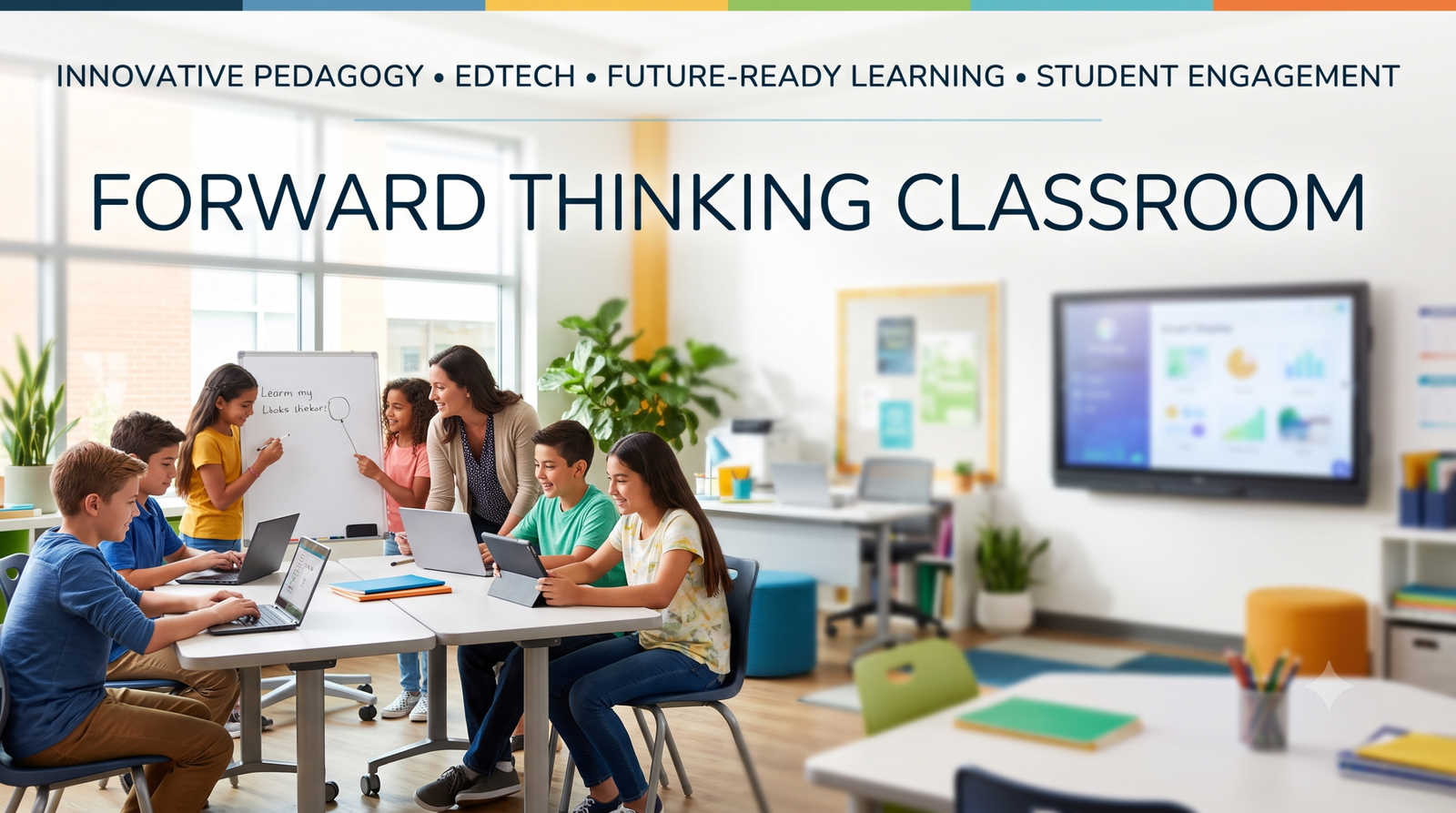
Forward Thinking Classroom

Forward-Thinking Classroom: Next-Gen Pedagogy and the Art of Active Minds

For over a century, the architectural and instructional blueprint of schooling remained remarkably frozen. Desks faced forward in rigid grids, the school bell dictated rhythm, and a solitary instructor delivered lectures from the front of the room. This industrial-era framework served a clear purpose: training students for compliance, standardized outputs, and routine labor.

Today, that paradigm has broken down entirely. When information is ubiquitously accessible and artificial intelligence can generate answers, draft code, and synthesize data in seconds, the old metrics of schooling—memorization, passive recall, and neat adherence to templates—are obsolete.

Transforming education into a forward-thinking ecosystem requires far more than merely hanging digital whiteboards or handing every child a tablet. True modernization lives in instructional design. Within the realm of Next-Gen Pedagogy & Teaching Strategies, educators are redesigning learning spaces to cultivate human capabilities: adaptability, systemic thinking, creative problem-solving, and intellectual agency.

1. From Information Delivery to Collaborative Facilitation

The historic concept of the teacher as the primary repository of knowledge—the "sage on the stage"—no longer reflects how information moves through society. When students can query any historical fact or mathematical derivation instantaneously, a teacher’s ultimate value lies in mentoring the synthesis, critique, and application of that knowledge.

  ~ Inquiry-Driven Scaffolding: Instead of beginning a physics unit with Newton’s third law on a whiteboard, modern facilitators begin with an unexpected physical contradiction or an engineering problem. Students make observations, debate underlying principles, and construct their own theoretical models before formalizing formulas.

  ~ Socratic Interrogation and Dialectic Reasoning: In an era rife with algorithmic feeds and machine-generated summaries, students must learn to interrogate sources. Forward-thinking classrooms prioritize civil debate, structured seminar circles, and rhetorical scrutiny, training learners to ask: Whose perspective is missing? What assumptions govern this model?

The educator’s job is no longer to tell students what to think, but to design rigorous environments that demand they think for themselves.

2. De-Silofed Learning: Authentic Project-Based Pedagogy

School curricula historically chopped human knowledge into disconnected 50-minute segments: biology from nine to ten, literature before lunch, economics in the afternoon. Yet no significant societal challenge—from climate adaptation to urban infrastructure—respects academic silos.

Next-generation pedagogy relies on comprehensive Project-Based Learning (PBL) that mimics real-world complexity:

Traditional Instruction
Project-Based, Next-Gen Pedagogy

Focus on memorizing isolated formulas and dates

Focus on applying concepts to authentic, messy problems

Closed-book, multiple-choice testing

Public presentations, portfolio defenses, or working prototypes

Standardized outcomes where all students do the same task

Differentiated inquiry with varied solutions and pathways

Hypothetical textbook scenarios

Local community challenges, client briefs, or open research

Whether designing sustainable irrigation models for a local community garden or analyzing demographic shifts using statistical software, PBL gives learning an immediate, tangible purpose.

3. The Modern Flipped Classroom: Meaningful Synchronous Time

The traditional flipped model—watching a recorded lecture at home and doing homework in class—has evolved. Modern pedagogy treats synchronous class time as high-value collaborative space.

Pre-Class Knowledge Acquisition: Students explore foundational concepts asynchronously via interactive modules, curated readings, or short instructional media at their own pace.

In-Class Dynamic Application: In-person sessions are reserved for debate, hands-on lab experiments, peer code reviews, or design sprints.

Low-Stakes Formative Checkpoints: Adaptive exit tickets and interactive micro-quizzes pinpoint misconceptions before class begins, allowing educators to address learning gaps in real time.

By shifting passive reception outside the room, the physical classroom becomes a buzzing laboratory of applied thought.

4. Competency-Based Education (CBE) Over Seat Time

One of the most persistent bottlenecks in education has been the assumption that learning occurs on a strict, uniform schedule. If a student earns a "C" on a foundational algebra exam, the class moves on anyway—leaving foundational cracks that widen over time.

Next-generation teaching embraces Competency-Based Education (CBE):

  ~ Mastery-Driven Progression: Students advance only when they demonstrate verified mastery of a core skill or standard, rather than when a calendar week ends.

  ~ Iterative Revision: Failure is treated as data, not a permanent grade. Learners receive actionable feedback and the opportunity to iterate, revise, and resubmit work until standards are met.

  ~ Personalized Pacing: Advanced learners are freed to pursue accelerated inquiry or deeper electives, while students needing reinforcement receive targeted interventions without stigma.

5. Gamification and Experiential Simulations

Gamification in modern pedagogy goes far beyond earning digital badges or points. It leverages the underlying mechanics of game design—rapid feedback loops, calibrated challenges, safe failure states, and narrative agency—to drive sustained intrinsic motivation.

Scenario-Based Simulations: Students take on roles such as diplomats negotiating climate treaties, biomedical ethicists evaluating genetic therapies, or urban planners balancing municipal budgets.

Micro-Credentials and Quest Structures: Structuring curricula into exploratory "quests" gives learners autonomy over which problems they tackle first, mirroring modern project management environments.

When failure carries zero existential penalty and acts purely as feedback to refine strategy, students develop cognitive resilience and a genuine willingness to take intellectual risks.

The Road Ahead

Building a forward-thinking classroom is not an overnight switch; it is an ongoing cultural and pedagogical shift. It asks schools to value question-asking over question-answering, iterative growth over one-shot testing, and cross-disciplinary agility over rigid curriculum pacing.

By placing modern instructional strategies at the center of the learning environment, educators don't just teach the future—they empower students to actively build it.

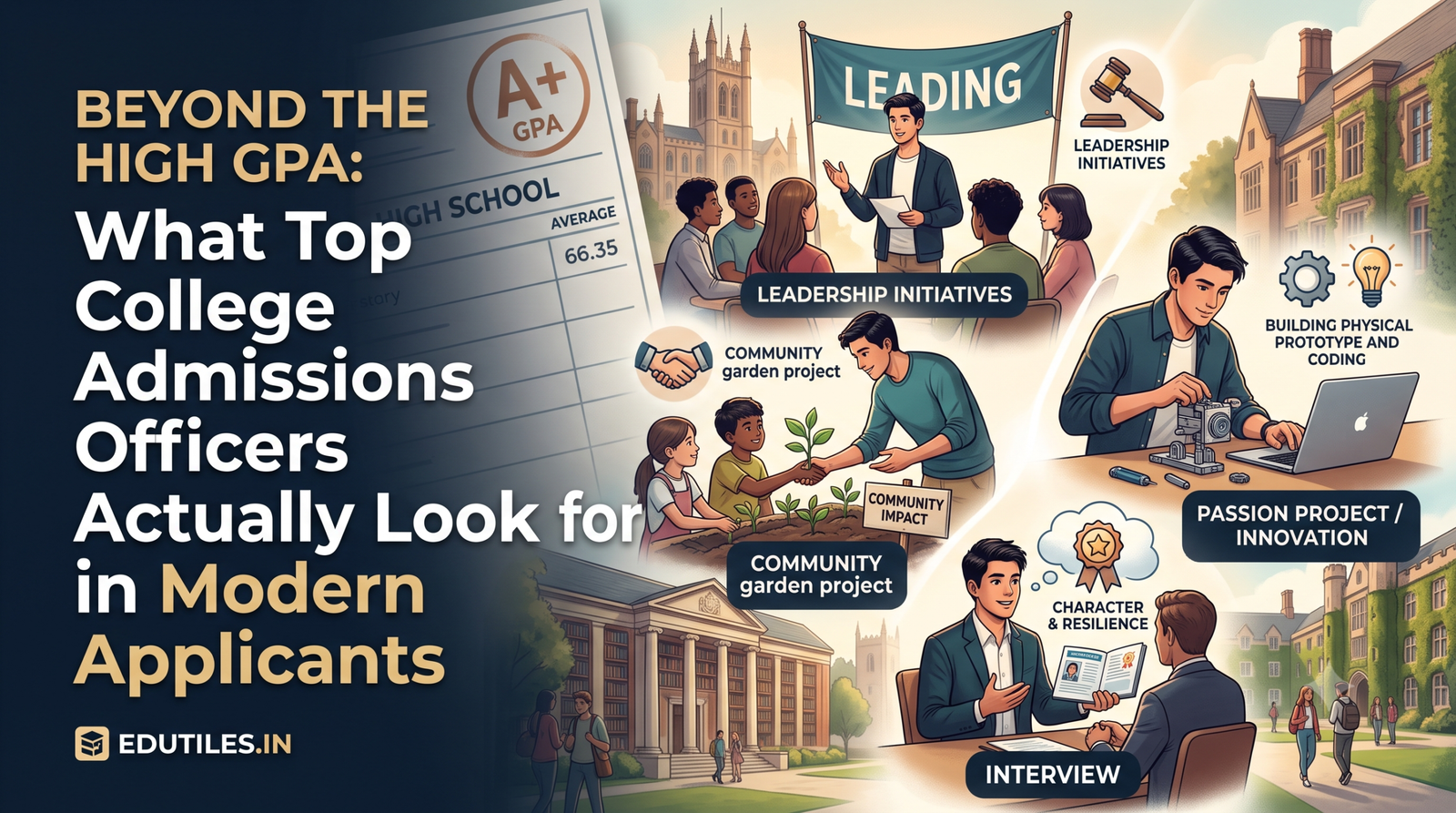
Beyond the High GPA: What Top College Admissions Officers Actually Look for in Modern Applicants

Beyond the High GPA: What Top College Admissions Officers Actually Look for in Modern Applicants

Every spring, tens of thousands of high school seniors open decision letters from elite colleges only to discover that a 4.0 unweighted GPA, a string of Advanced Placement courses, and a near-perfect standardized test score were not enough.

In today’s admissions environment, academic metrics operate merely as a preliminary threshold. A high GPA and competitive test scores answer a fundamental question for selective institutions: Can this applicant handle our academic rigor without drowning?

Once the answer is established as "yes," those numbers largely recede into the background. Top admissions committees—faced with applicant pools where the vast majority are academically qualified—turn their focus toward a far more subjective and discerning set of criteria.

1. Demonstrated Intellectual Curiosity Over Passive Achievement

Top institutions are wary of "checkbox students"—applicants who take every advanced course and earn every credential not out of intrinsic fascination, but because they believe it fits the formula for admission.

Admissions officers look for what is commonly called intellectual vitality: an appetite for learning that spills beyond the boundaries of a classroom syllabus.

  ~Self-Directed Exploration: Did an interest in linguistic history lead the student to teach themselves Old English, digitize dialect recordings, or conduct independent archival research?

  ~Depth Over Breadth: Rather than accumulating ten unrelated high-level courses, the student demonstrates a coherent academic thread, pursuing a subject through external reading, specialized summer seminars, or original research alongside a faculty mentor.

  ~Reflective Synthesis: Essays and letters of recommendation illustrate that the student asks unconventional questions during discussions and genuinely wrestles with complex concepts rather than merely hunting for an "A."

Colleges want thinkers who will enliven seminar tables and dorm lounges at midnight, not test-taking automatons whose intellectual curiosity switches off when the bell rings.

2. Distinctive Impact: The "Spike" Replaces the "Well-Rounded" Myth

The conventional advice to become a "well-rounded" student—joining six clubs, playing an instrument, running track, and volunteering on weekends—has been obsolete for years. Elite institutions do not build well-rounded classes by admitting well-rounded individuals; they build them by assembling a well-rounded class composed of deeply specialized, "pointy" applicants.

Admissions officers evaluate extracurriculars through a framework known as the "Scope of Impact":

Tier

Profile

Perceived Admissions Value

Participatory

General member of 4–6 school clubs; basic volunteer hours

Low / Baseline

Local Leadership

Club president, varsity team captain, student council representative

Moderate; demonstrates organizational reliability

Transformative Impact

Founded a regional initiative, drafted local policy, published original research

High; demonstrates tangible execution and initiative

National / Global Scale

Nationally ranked competitor, creator of widely adopted open-source software

Rare; proves exceptional mastery and drive

What matters is not the title an applicant holds, but the tangible footprint they leave behind. Did the student merely inherit an existing school club, or did they fundamentally restructure it, secure external sponsorships, and expand its reach to neighboring communities? Admissions teams favor the self-starter who transforms their environment over the passive collector of club titles.

3. Character, Emotional Intelligence, and Context

In a holistic review system, qualitative traits carry substantial weight. Admissions teams seek to understand what an applicant will be like as a roommate, lab partner, and community member.

Authentic Voice in Essays: The college essay is not a literary resume; it is a lens into how an applicant processes their life experiences. Officers look for self-awareness, modesty, and vulnerability. An essay reflecting honestly on a personal failure or an ethical dilemma is infinitely more compelling than an overwrought narrative celebrating a championship victory.

External Validation Through Counselor and Teacher Recommendations: The most effective recommendation letters do not recite grades. They provide specific anecdotes illustrating how an applicant supports struggling peers, handles criticism, or elevates classroom discourse.

Contextual Evaluation: Admissions officers review applications through the lens of institutional context. A student who worked thirty hours a week to help pay their family’s mortgage—leaving no time for varsity sports or model UN—is evaluated for resilience and maturity, qualities prized just as highly as an elite summer internship.

4. Cohesion and Institutional Alignment

Finally, an applicant must demonstrate cohesion—a clear, credible throughline connecting their coursework, extracurricular endeavors, personal writing, and future ambitions.

When an application is cohesive, every component reinforces the same narrative:

A student pursuing environmental science who has engaged in local wetland restoration, taken advanced statistics to model climate projections, and written an essay on the economic tensions of municipal water rights presents a compelling, clear identity.

Conversely, a resume scattered across unrelated activities with disjointed essays leaves admissions officers unable to determine who the applicant actually is or how they will contribute to the campus ecosystem.

Every institution also maintains specific, shifting institutional priorities—whether that is expanding an emerging quantum computing institute, strengthening the university brass orchestra, or enrolling more students from underserved rural districts. When an applicant’s distinct profile aligns naturally with what the campus currently needs, an offer of admission follows.

A high GPA ensures an application is placed on the desk rather than in the rejection pile; it secures an audition, not a role. What ultimately earns an admission envelope is the evidence that the student possesses the self-directed drive, emotional maturity, and creative initiative to make meaningful contributions to a university community and the world beyond it.

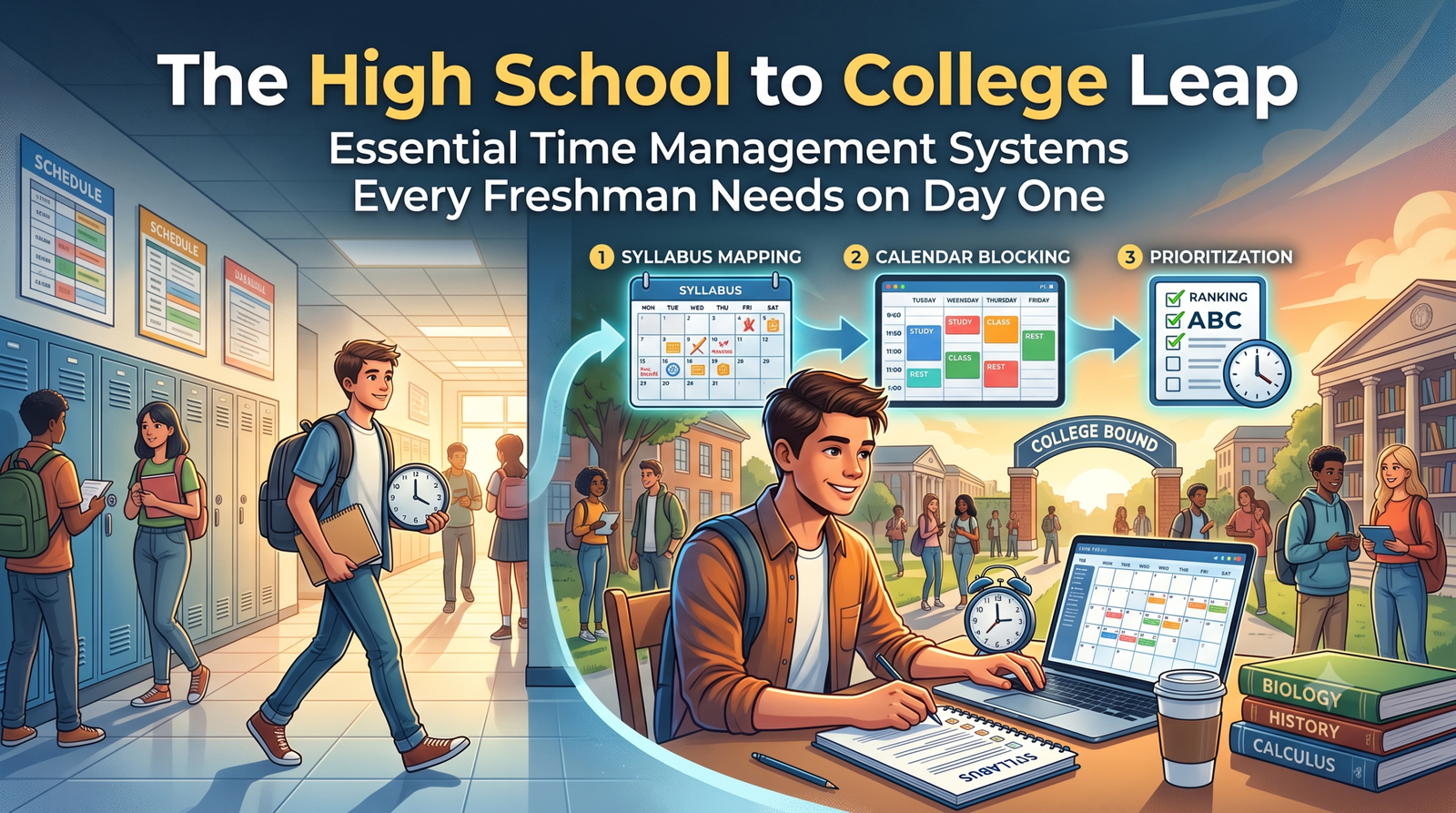
The High School to College Leap: Essential Time Management Systems Every Freshman Needs on Day One

The High School to College Leap: Essential Time Management Systems Every Freshman Needs on Day One

The leap from high school to higher education is widely celebrated as an intellectual and personal milestone. Yet for the vast majority of incoming freshmen, the most daunting barrier during the first semester has little to do with advanced academic theories or rigorous textbooks. It is an abrupt collision with unstructured time.

Throughout secondary school, life is dictated by external scaffolding. Bell schedules divide the day into uniform intervals, homeroom attendance enforces punctuality, and parents and educators supply daily reminders about impending worksheets, tests, and extracurricular practices. A student’s waking hours are managed almost entirely from the outside.

College shatters this structure overnight.

A standard full-time university schedule demands only twelve to fifteen hours inside a lecture hall per week. To an unseasoned freshman, this schedule gives the illusion of endless leisure. Morning lectures wrap up by noon, leaving expansive afternoons with no mandatory checkpoints. Without an intentional framework, this vacuum quickly leads to the "freshman drift": days dissolve into scrolling social media, unstructured dorm room lounging, and frantic cram sessions when midterms suddenly appear.

Thriving in college requires replacing external discipline with self-directed infrastructure from day one. Below are four core time management systems designed to turn unstructured hours into focused academic momentum.

1. The Syllabus Audit and Reverse-Engineered Master Calendar

In high school, teachers actively manage student pacing, offering gentle nudges about upcoming due dates. College professors operate under an entirely different social contract: handing out a syllabus during week one is considered their first, last, and only warning.

During the first weekend of classes, run a comprehensive syllabus audit across every registered course:

Centralize Deadlines: Collate every single exam, paper milestone, lab report, reading discussion, and final project into one master system—whether a digital calendar or a project board.
Deconstruct Long-Horizon Projects: If an eight-page research synthesis is due in mid-November, entering only the final due date invites procrastination. Break the project into four distinct operational checkpoints: 
       
       Weeks 1–2: Topic approval and primary source gathering.
       Week 3: Structural outline and thesis defense.
       Week 4: Rough draft completion.
       Week 5: Citations pass and final copyediting.

By converting a static final date into manageable weekly tasks, long-term anxiety is replaced with concrete micro-goals.

2. The 9-to-5 Model: Treating Daylight as Committed Time

The most common trap freshmen fall into is treating midday intervals between classes as vacation. An empty two-hour block between a 10:00 AM economics lecture and a 1:00 PM seminar is routinely squandered on casual breaks or naps. Pushing all homework to the late evening guarantees exhaustion and burns into vital sleep cycles.

Adopt the corporate 9-to-5 framework:

Anchor the Hours: Commit to treating Monday through Friday, 9:00 AM to 5:00 PM, as an active workday.
Optimize Midday Gaps: If you have an open window between lectures, head directly to a designated campus library or study hall. Use that time to review notes taken an hour prior, knock out short problem sets, or complete assigned readings.
Earn Guilt-Free Evenings: Completing six to eight hours of blended academic work during standard business hours ensures that your evenings remain entirely your own. You can attend student club meetings, socialize, exercise, or rest without the persistent dread of unfinished work hanging over your head.

3. The 2:1 Credit-Hour Benchmark

Many students stumble early because they fail to anticipate the sheer volume of independent preparation expected at university level. The standard academic formula is straightforward: for every one credit hour spent in class, plan for two hours of independent study, synthesis, and research.

Taking a 15-credit schedule implies roughly 15 hours of physical classroom time plus an estimated 30 hours of self-directed academic labor—amounting to a full 45-hour workweek.

Rather than viewing study sessions as open-ended, amorphous blocks of time, assign rigid objectives to your daily calendar:

    Instead of: "Study biology on Tuesday afternoon.

   "Use: "Tuesday, 2:00 PM–3:30 PM: Summarize Chapter 4 diagrams and complete practice quiz questions 1–25."

4. The 30-Minute Sunday Operational Reset

Schedules are living entities; unexpected campus events, sudden illness, or difficult problem sets will inevitably derail your plans. Without a regular recalibration point, small slips compound into an overwhelming backlog.

Set aside thirty minutes every Sunday evening to conduct an operational check:

  1. Audit the Past Week: Did you miss a assigned chapter? Did an assignment reveal concept gaps that warrant visiting a professor's office hours?

  2.Scan the Horizon: Identify high-stress days ahead. If a chemistry midterm falls on a Thursday, use Monday and Tuesday to absorb the primary revision load.

  3.Reset the Work Environment: Clear your physical workspace, organize your digital files, and prepare backpacks and materials for Monday morning.

The True Objective: Protecting Mental Health

Mastering your schedule is not about maximizing mechanical output or filling every second with frantic productivity. Its true value lies in boundary protection.

A structured calendar protects regular sleep, consistent nutrition, authentic social connections, and mental health. When your academic obligations are accounted for systematically, you gain genuine psychological freedom. By establishing these frameworks on day one, you transition from reacting to the demands of college to actively authoring your own academic experience.

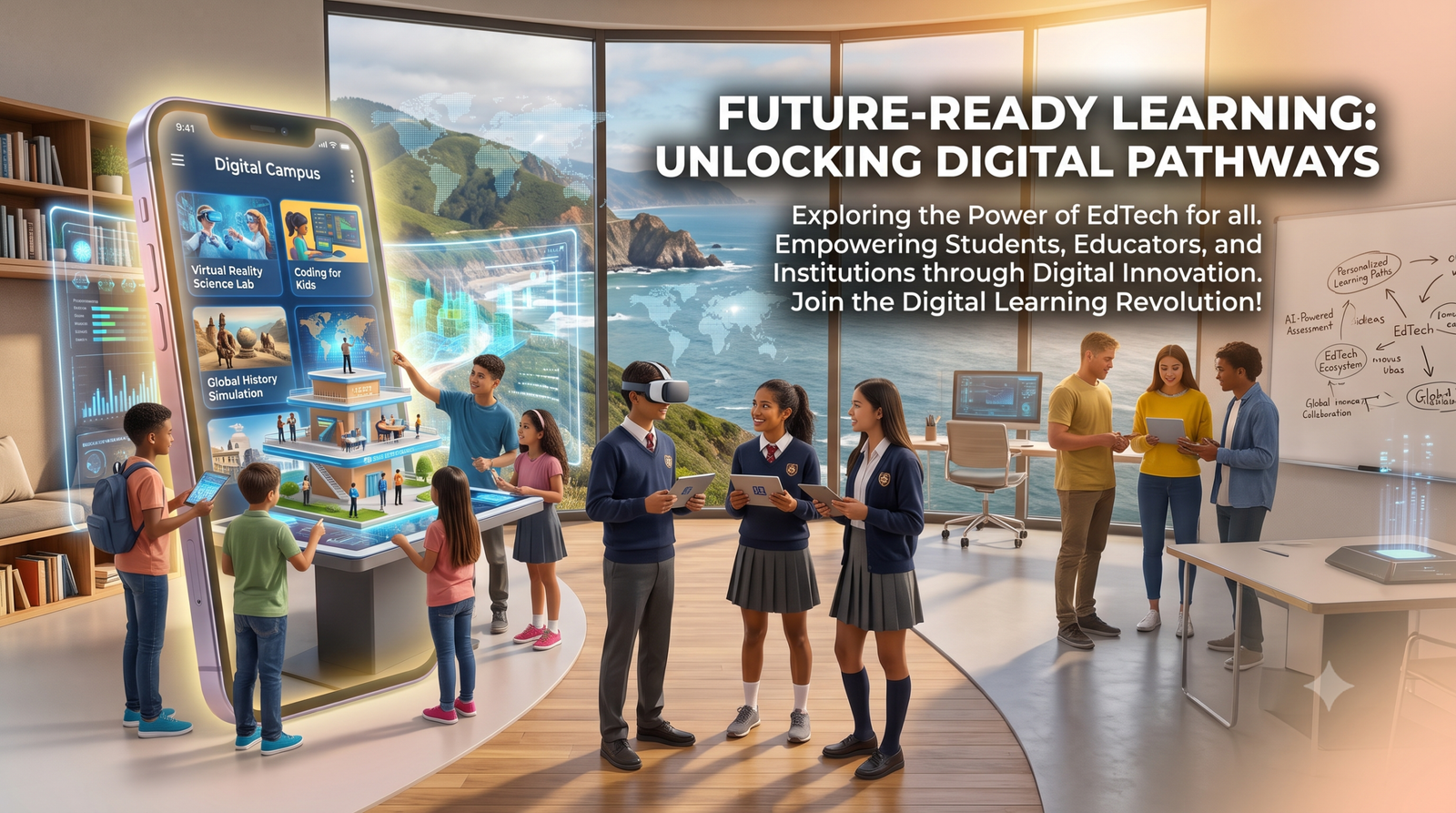
The Classroom Shift: How EdTech and AI Are Reshaping Student Learning

EdTech & AI in Education: Reimagining the Architecture of LearningThis is a title

For decades, educational technology meant swapping chalkboards for smartboards and textbooks for PDFs. While digitizing the classroom modernized distribution, it left the underlying pedagogical architecture unchanged: an industrial, one-size-fits-all model operating on fixed schedules and uniform assessments.

The convergence of modern Educational Technology (EdTech) and Artificial Intelligence (AI) has dismantled that paradigm. Technology in education is no longer a passive conduit for static information; it has evolved into an active cognitive partner capable of diagnosing misunderstandings, adapting instructional pacing, and unlocking personalized learning at scale.

The Evolution of Hyper-Personalized LearningThe Evolution of Hyper-Personalized LearningThis is a title

Every classroom houses a wide spectrum of cognitive styles, foundational proficiencies, and learning paces. Historically, teachers had to teach to the middle, leaving advanced students disengaged and struggling students behind. AI-driven adaptive platforms solve this core structural limitation.

By analyzing student interactions in real time—evaluating not just whether an answer is correct, but how long a student hesitated, what intermediate steps they took, and where their logic faltered—intelligent tutoring systems continuously recalibrate instructional difficulty. If a student struggles with algebraic factoring, the platform can immediately backtrack to reinforce greatest common factors using visual models. Conversely, when a student displays mastery, the software advances without forcing them through repetitive drills. This shift transforms education from a compliance-driven timeline into a mastery-driven journey.

Augmenting Educators, Not Replacing Them

A common misconception is that AI-powered EdTech aims to automate teachers out of the classroom. In reality, its greatest value lies in reclaiming human instructional time.

Educators routinely lose up to half their working hours to administrative friction: rubric grading, attendance logistics, differentiated worksheet creation, and compliance reporting. Modern generative models and workflow assistants can draft diagnostic quizzes, generate customized reading passages adjusted for different Lexile levels, and synthesize student progress notes in seconds.

When technology absorbs administrative overhead, teachers transition from content deliverers into mentors, facilitators, and emotional anchors. No algorithmic model can inspire intellectual curiosity, build empathy during a difficult adolescent transition, or detect the unspoken discouragement of a student falling behind. By automating routine logistics, AI restores the human relationship at the heart of teaching. 

Expanding Accessibility and Global Equity

AI-infused EdTech is breaking down long-standing physical and socio-economic barriers to specialized instruction. For neurodivergent learners or students with disabilities, integrated assistive tools are revolutionary. Real-time voice-to-text engines, automated screen readers tailored for dyslexia, and multi-modal interfaces allow students with diverse sensory and cognitive needs to engage with identical core curricula alongside their peers.

On a macro level, mobile-first, low-bandwidth AI platforms provide students in under-resourced regions with access to high-tier academic support. An individual learner in a remote village with an affordable smartphone can interact with an on-demand tutor that explains complex physics concepts in their native dialect—democratizing access to high-caliber tutoring that was once the exclusive privilege of affluent households.

Navigating Ethics, Privacy, and Cognitive Agency

This transformation is not without friction. The integration of AI into schools surfaces urgent questions regarding academic integrity, cognitive dependency, and student surveillance.

The initial institutional response to generative AI was panic over cheating. However, unreliable algorithmic detectors and blanket bans proved counterproductive. The deeper risk is not cheating, but cognitive offloading—the danger that learners bypass the productive struggle necessary to forge neural pathways for critical analysis, argumentation, and synthesis. If an AI synthesizes every text and solves every equation, students risk becoming passive consumers of machine output rather than active thinkers.

Furthermore, student data privacy requires stringent safeguards. The predictive models underpinning educational software rely on vast telemetry datasets. Schools must ensure that pupil data is never harvested for commercial profiling and that algorithmic assessments do not reinforce historical systemic biases.

The Path Forward

The goal of EdTech is not to build frictionless, teacherless learning factories. Rather, its purpose is to create dynamic educational environments where technology handles diagnostic pacing and administrative scaffolding, freeing humans to focus on what humans do best: questioning, debating, creating, and connecting.

As education moves forward, success will not be measured by the sophistication of classroom algorithms, but by whether those tools cultivate autonomous, resilient thinkers ready to navigate an increasingly complex world.

Add AI Chatbot

It talks to your visitors, helps, explains, works in all languages, never misses a chat and increases conversion rates!

Install Asyntai Plugin