
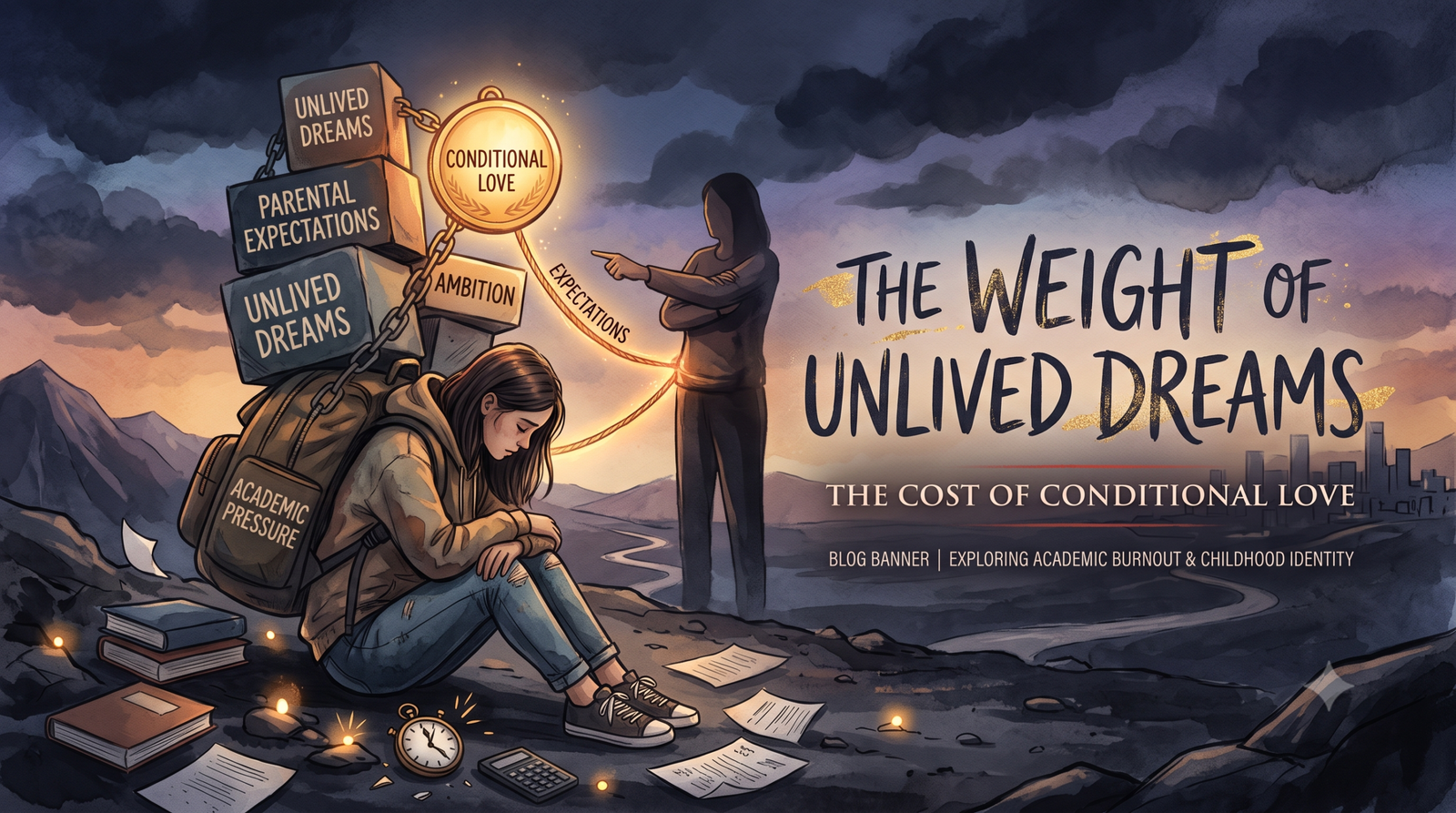
The Weight of Unlived Dreams: The Cost of Conditional Love in Modern Education
The light beneath the bedroom door stays on well past midnight. Inside, a teenager hunches over an open textbook, eyelids heavy, fighting off sleep with splashes of cold water and instant coffee. On the table sits a mock test paper scored in bright red ink: 92%. In most contexts, ninety-two percent is a sign of mastery, dedication, and intelligence. But in this room, it feels like an indictment. Down the hall, parents whisper with furrowed brows about cutoffs, percentiles, and the neighbor’s child who secured ninety-six.
The air in the house is thick with a quiet, suffocating disappointment. The message, though unspoken, is received with absolute clarity: You are almost enough, which means you are not enough at all.
This scene plays out across millions of households every night. Under the banner of love, duty, and sacrifice, parents often place an unbearable burden upon their children—the weight of their own unlived dreams. In doing so, they inadvertently introduce their children to one of childhood's most corrosive dynamics: conditional love.
The Architecture of Parental Projection
Parental ambition rarely begins with malice. In its infancy, it looks like devotion: buying extra workbooks, enrolling a child in top coaching institutes, rearranging household routines around test schedules. Many parents grew up in environments of economic precarity where a single exam determined lifelong stability. Others harbored creative or intellectual ambitions that were derailed by family obligations, lack of funds, or systemic hardship.
When their own children arrive, a psychological transposition quietly occurs. The child is no longer viewed merely as an independent individual with a distinct mind and passions; they become a second chance at life. The parent’s unfinished ambitions—the engineering degree never earned, the medical career abandoned, the social prestige never achieved—are carefully repackaged and handed to the child as a moral inheritance.
Parents tell themselves, "I am doing everything so they have a better life than I did." Yet, when a child’s natural inclinations clash with this pre-scripted destiny, parental anxiety exposes its true origin. The child is not being guided toward self-actualization; they are being drafted into running a marathon they never chose to enter.
The Currency of Conditional Affection
The most devastating consequence of this projection is how it alters the emotional climate of the home. When academic excellence becomes the family's primary currency, parental warmth behaves like a fluctuating stock market.
A top rank earns warm smiles, lavish praise, public bragging at family gatherings, and an atmosphere of safety. A mediocre score, or even an above-average result that falls short of perfection, brings stony silence, cold sighs, subtle guilt-tripping, or outright rage: "After everything we sacrificed for you?"
Children are keen emotional barometers. They quickly learn to read the fine print of their family dynamic: Affection is not an inherent right; it is a reward for performance.
When affection is conditional, self-worth becomes unstable. A child internalizes the belief that they are only worthy of love, dignity, and respect when they are victorious. Mistakes are no longer natural milestones of learning; they become existential crises. The fear of failure stops being about a low grade—it transforms into the terror of abandonment and emotional exile within one’s own family.

The Silent Crisis: Anxiety, Emptiness, and Identity Foreclosure
The psychological toll of shouldering unlived dreams is profound and lasting. In competitive academic hubs and high-pressure schooling systems, we see a generation of young people living in a perpetual state of nervous system arousal. Chronic insomnia, panic attacks before exams, and psychosomatic illnesses have become normalized rites of passage.
Even more insidious is the phenomenon psychologists call identity foreclosure. In dedicating every waking hour to meeting external expectations, young people never develop the space to ask fundamental questions: Who am I when I am not studying? What brings me joy? What are my own values?
When these students eventually reach adulthood—even when they successfully enter the elite universities their parents coveted—many experience a crushing sense of emptiness. They have achieved the goal, but they have lost the self. They possess brilliant resumes, yet suffer from chronic imposter syndrome and an inability to find personal fulfillment. They have lived someone else's script for so long that their genuine self has atrophied.

Dismantling the Altar of Achievement
Breaking this cycle does not require abandoning discipline, nor does it mean encouraging complacency. Healthy aspiration is an essential part of growth. But aspiration must belong to the individual pursuing it.
Parents must engage in the painful, necessary work of self-reflection. They must have the courage to ask themselves: Is my anxiety truly about my child’s future well-being, or is it about my social standing, my unresolved regrets, and my fear of the unknown?
True love in parenting is unconditional. It provides a sanctuary where a child can fail, rest, and dust themselves off without fearing that their place in the family's heart has been compromised. The dinner table must never become a secondary examination hall; the home should be the one place where a young person does not have to justify their existence with a test score.
Children are not blank canvases for their parents' unfinished masterpieces, nor are they vessels to settle history's debts. They are separate beings entitled to their own triumphs, their own mistakes, and their own dreams. The greatest gift a parent can offer is not a predetermined ladder to success, but the freedom to let go of the past—allowing the child to lay down the heavy weight of unlived dreams and walk lightly toward their own horizon.